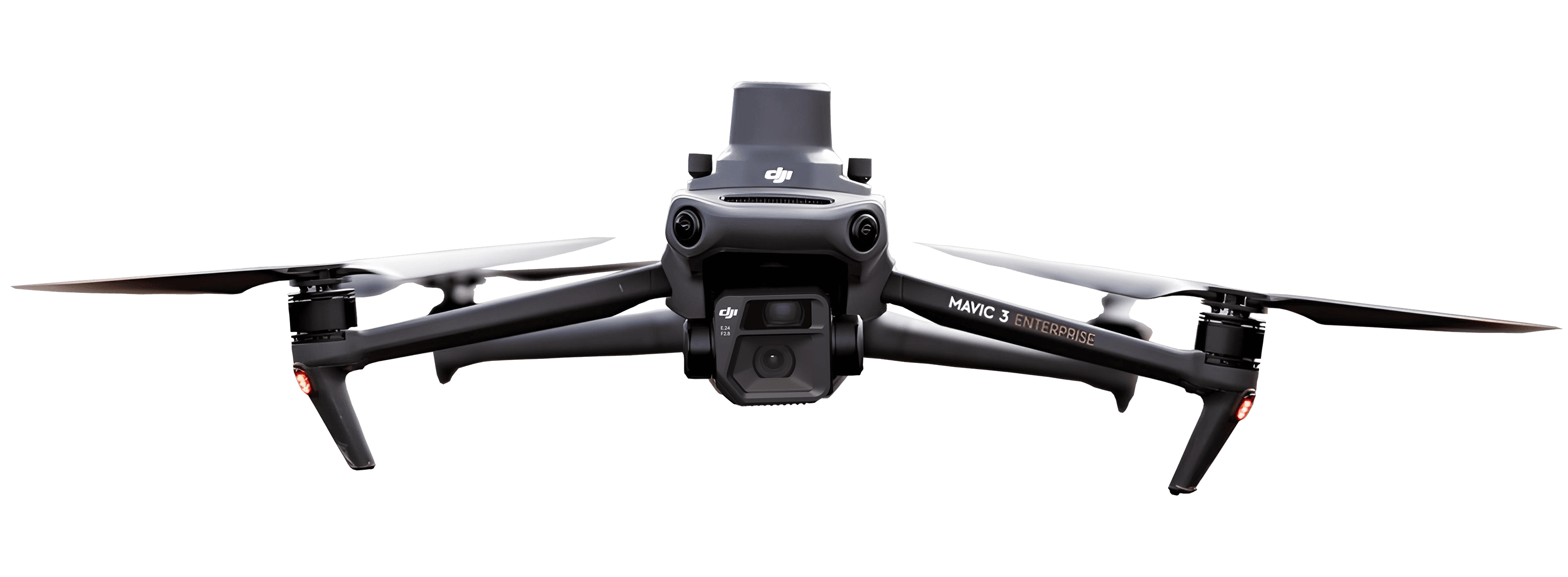
Best drone data platforms for 2026
Updated:
Which drone data platforms stand out as the most relevant options in 2026?
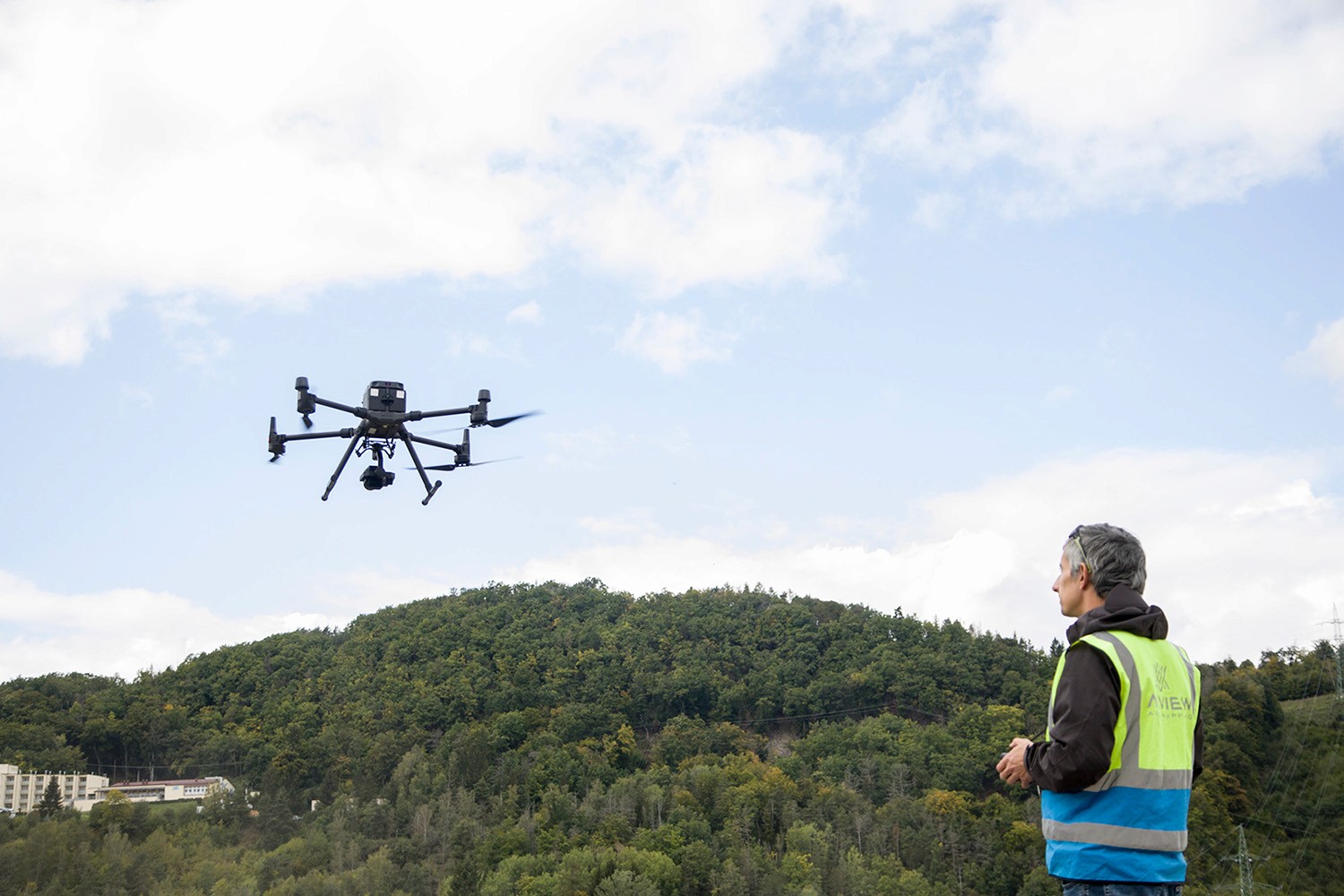
Introduction
A drone data platform is software that processes aerial imagery into usable outputs: orthomosaics, 3D models, volume calculations, and progress reports. Construction and surveying teams depend on these platforms for measurement and reporting across the full project lifecycle.
The sector keeps growing. According to the FAA’s 2025 Aerospace Forecast, U.S. commercial drone registrations reached 965,524 by the end of 2024, with more than 124,000 new registrations that year alone. The FAA’s 2024 sUAS Survey Report found that construction and real estate are the leading commercial drone sectors among Part 107 operators.
This article highlights seven drone data platforms that represent some of the most relevant and widely used options available today. Each platform offers a different balance of processing methods, accuracy, usability, and industry focus. The list below outlines these solutions, providing a structured overview to help teams compare capabilities and identify which platform best aligns with their requirements.
The seven drone data platforms covered in this article are:
AVAG
DJI Terra
Skydio 3D Scan
Site Scan by DJI
Propeller
Pix4D
DroneDeploy
1. AVAG
AVAG is a cloud platform that turns raw drone data into accurate 2D and 3D visualizations, volume calculations, progress reports, and invoice-ready outputs that teams can act on the same day.
One of the things that sets AVAG apart is its flexible processing approach. Users can choose fully automated data processing for rapid turnaround or use AVAG’s expert review and verification services for projects requiring additional precision and quality assurance.
The platform’s layered 2D/3D views let teams switch between perspectives and overlay multiple datasets for comprehensive analysis. This layered view makes it easier to spot issues early, then communicate findings to stakeholders. If you want to understand how drones create accurate 3D models, AVAG’s photogrammetry guide covers the fundamentals.
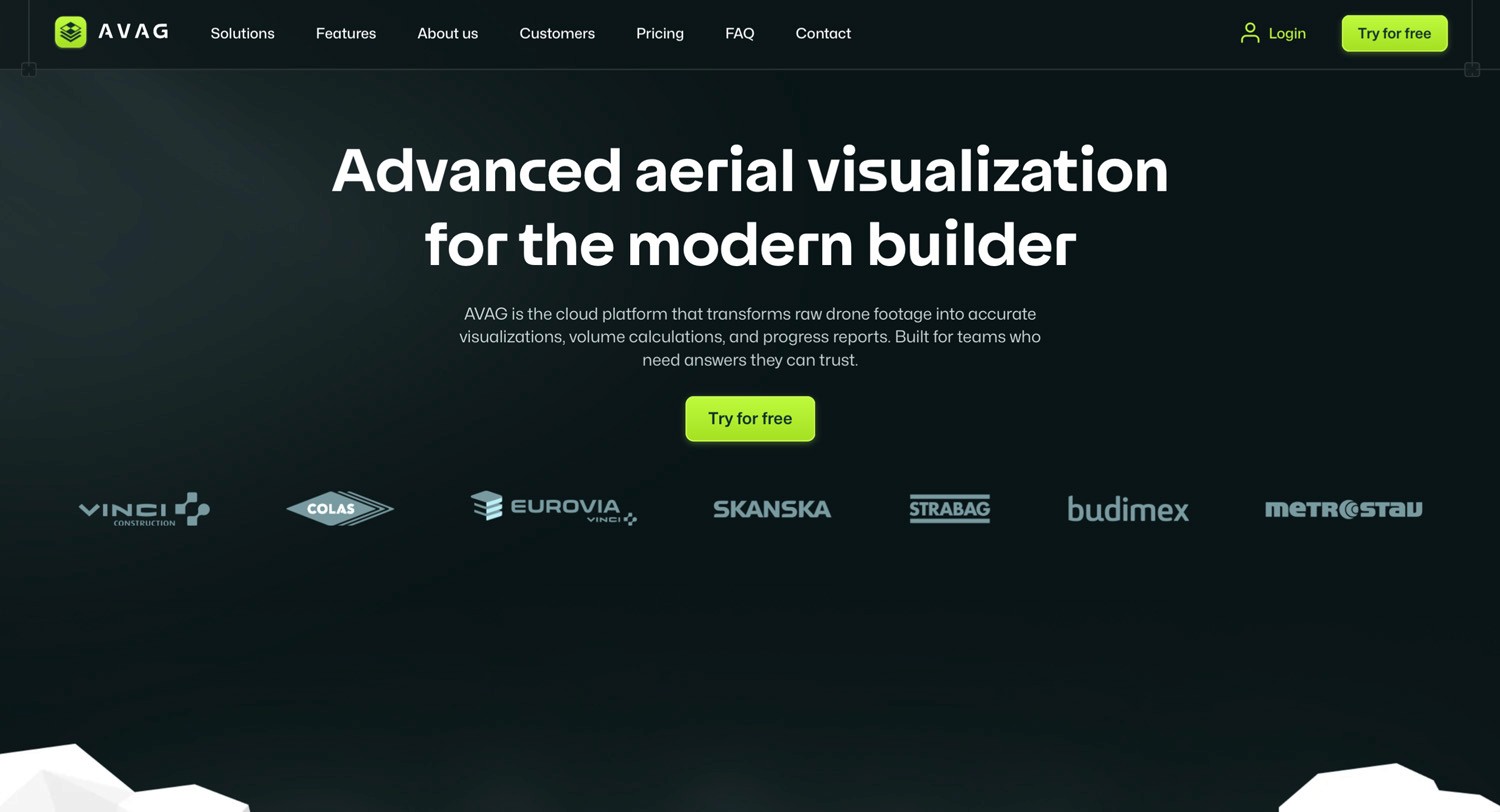
AVAG’s cloud infrastructure ensures that teams can monitor projects and share insights instantly from anywhere. The platform excels in construction and earthworks, with intuitive tools for volumetric analysis, site progress monitoring, and stockpile management. Learn more about how to measure earthworks accurately.
What sets AVAG apart
Unlimited users at no extra per-seat cost. Entire teams can access project data without license bottlenecks.
EU-hosted data storage. AVAG runs on its own hardware in the EU, which matters for teams with data-residency requirements.
DJI Dock integration. AVAG is the only EU-based platform with full DJI Dock integration for automated capture and processing.
Multi-source ingestion. Combine drone imagery, LiDAR scans, 360° photos, and CAD files in one project, or import processed data from Pix4D, Agisoft, 3DSurvey, or DroneDeploy.
Six languages. The platform is available in six languages for distributed teams.
Trusted by industry leaders including STRABAG, Vinci Construction, and Colas, AVAG has proven its reliability on large-scale projects worldwide. The platform’s dedicated support team offers guidance on setup and day-to-day troubleshooting. For accuracy-critical work, understanding ground sample distance helps teams plan flights that meet their precision targets.
With competitive pricing suitable for operations of all sizes and flexible integration capabilities, AVAG is the complete package for drone data management in 2026.
2. DJI Terra
Where AVAG emphasizes cloud collaboration and flexible processing, DJI Terra takes a different approach: tight hardware integration and local desktop processing.
DJI Terra is the software extension of DJI’s drone hardware ecosystem. It is primarily a desktop-based solution with close integration with DJI aircraft and sensors. This tight coupling results in predictable workflows and stable performance for users operating exclusively within the DJI environment.
The platform supports mission planning, waypoint flights, oblique capture, and real-time 2D reconstruction. Its 3D modeling and point cloud generation tools are commonly used for construction documentation and inspection.

A key differentiator is DJI Terra’s perpetual licensing option, which appeals to organizations that prefer capital expenditure over recurring subscriptions. However, its collaboration features are limited compared to cloud-native platforms.
3. Skydio 3D Scan
For teams prioritizing autonomous flight over manual piloting, Skydio 3D Scan takes a different approach than either AVAG or DJI Terra.
Skydio 3D Scan is built around autonomous flight and obstacle avoidance, reducing reliance on skilled pilots in constrained environments. The platform is primarily used for infrastructure inspection and industrial facilities where manual flight presents higher risk.
Automated capture routines and repeatable flight paths support consistent data collection over time. Outputs include dense point clouds and detailed 3D meshes suitable for inspection and documentation workflows.
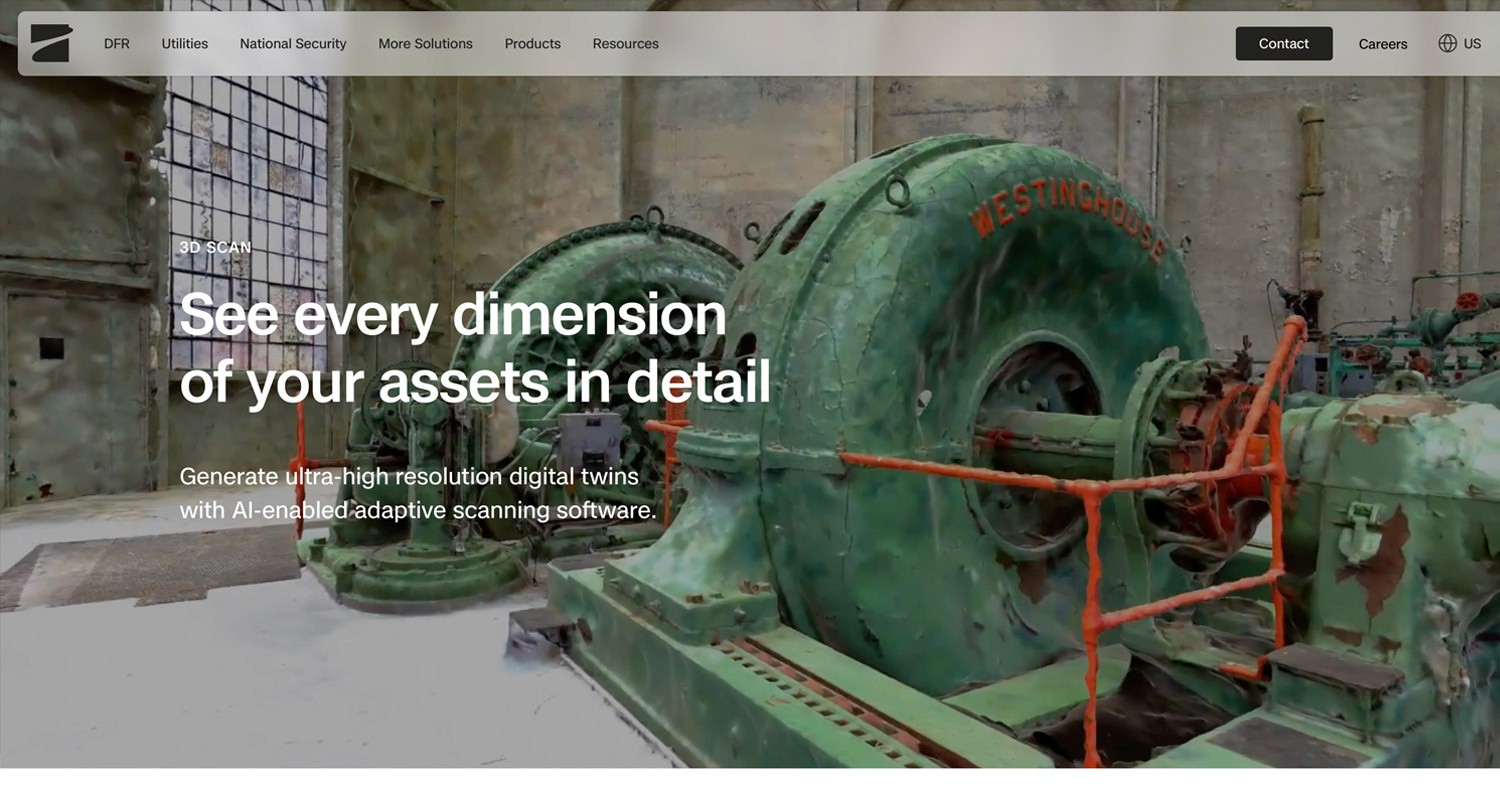
While Skydio 3D Scan excels in autonomy and safety, it is less focused on large-scale earthworks or volumetric analysis, making it more specialized than general-purpose mapping platforms.
4. Site Scan for ArcGIS
Site Scan for ArcGIS shifts the focus from inspection back to construction workflows, with tighter BIM integration than Skydio offers.
The platform is tailored for construction and infrastructure monitoring. It provides workflows designed around progress tracking and comparison between as-built conditions and design intent.
The platform includes volumetric measurement tools, annotation features, and BIM integration, allowing users to align drone data with construction models. Cloud-based sharing supports coordination between contractors and project owners.
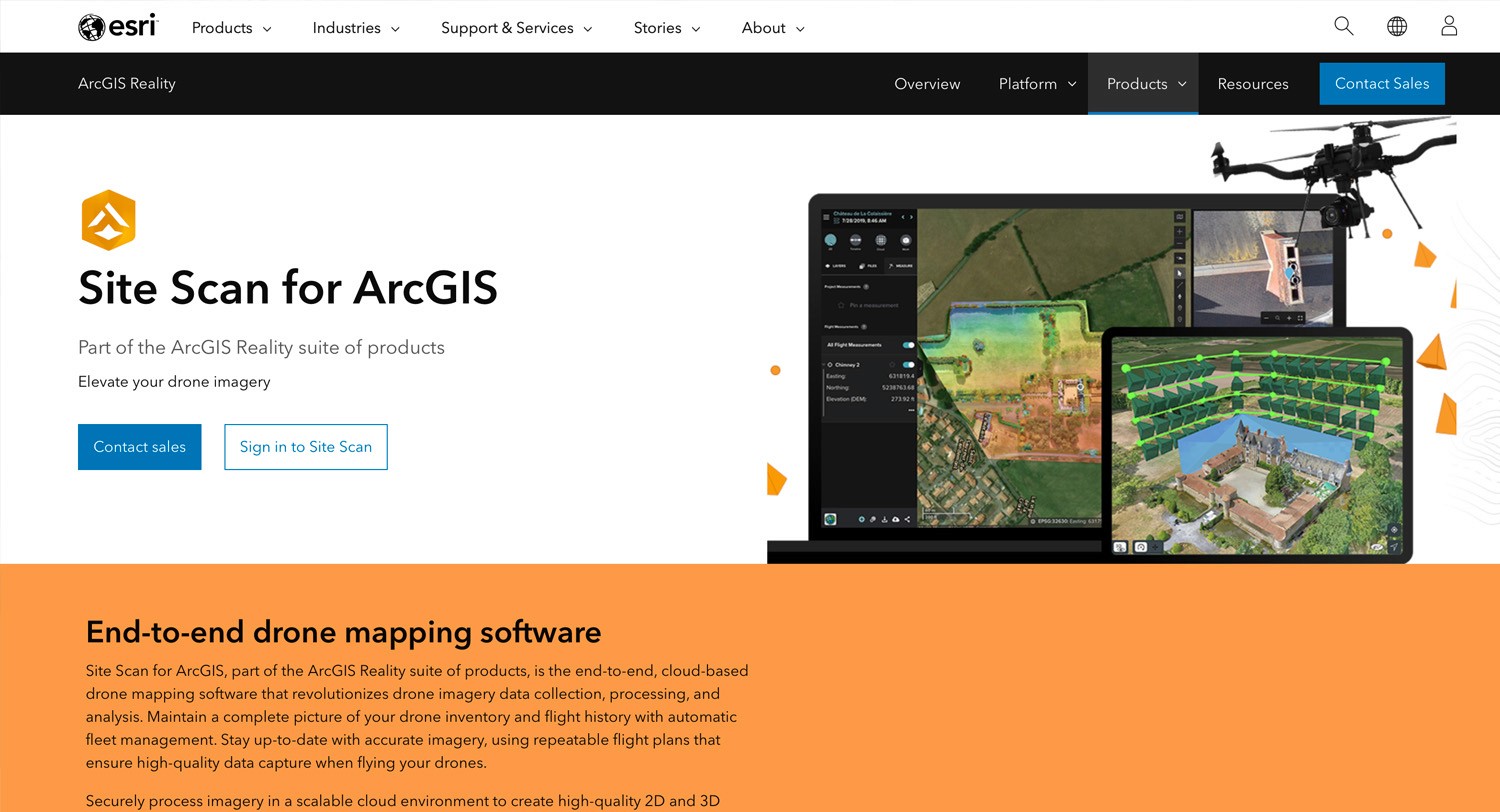
Site Scan is best suited for teams already invested in DJI hardware and construction-focused reporting, rather than broader surveying or multi-industry use.
5. Propeller
While Site Scan focuses on construction documentation, Propeller is purpose-built for earthmoving operations where volumetric accuracy is the primary deliverable.
Propeller is widely used in earthworks and quarrying, where volumetric accuracy and repeatability are critical. Its core strengths lie in cut-and-fill analysis and stockpile measurement.
The AeroPoints ground control system simplifies survey setup and improves consistency without requiring advanced surveying expertise. Propeller's reporting tools are oriented toward operational decision-making rather than visualization-heavy presentations.
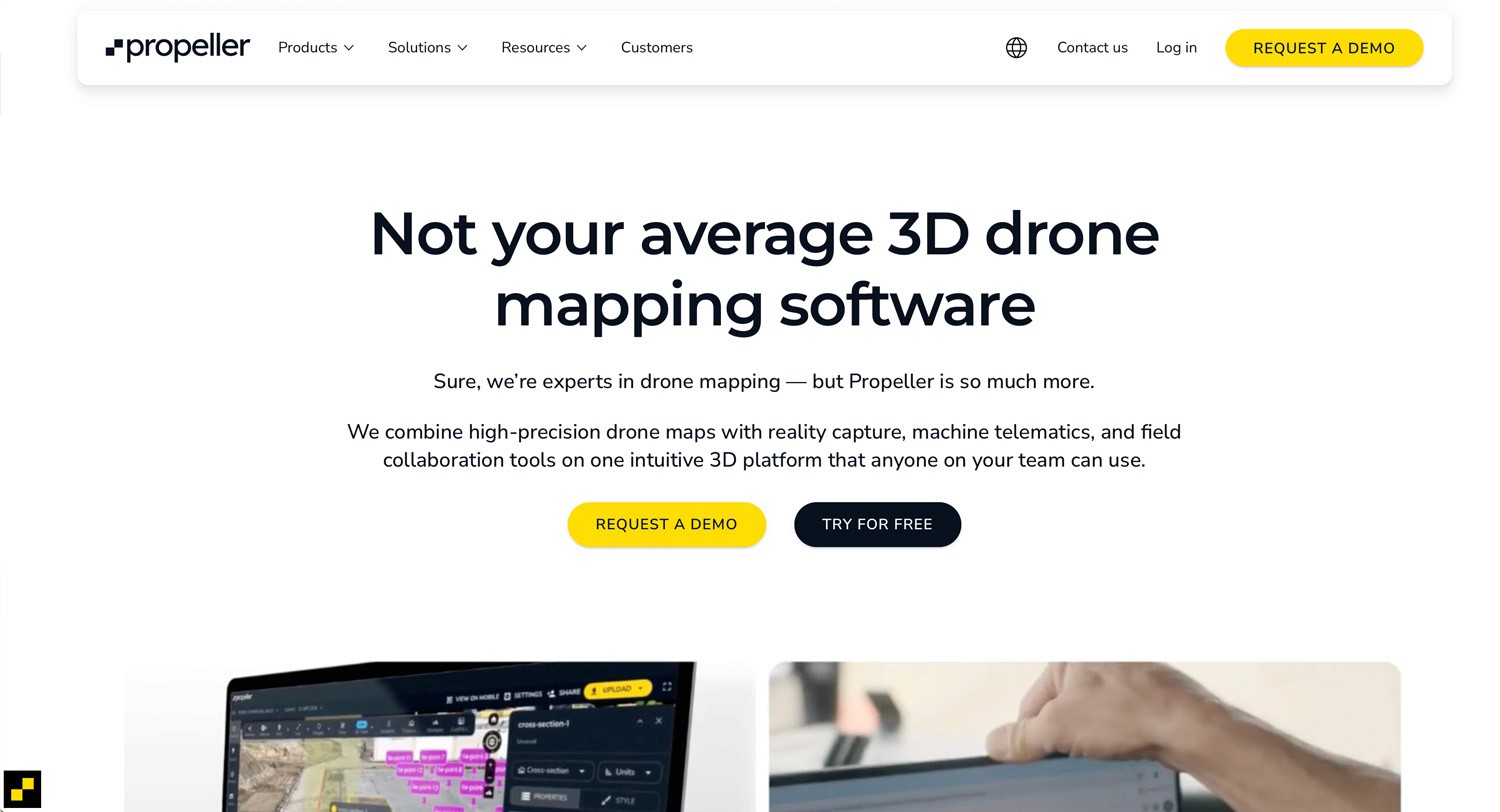
The platform is well aligned with contractors and operators managing frequent site updates, although its feature set is less expansive outside of earthmoving use cases.
6. Pix4D
Where Propeller offers specialized earthworks tools, Pix4D provides a broader technical toolkit for users who want granular control over processing.
Pix4D remains a technically capable photogrammetry solution with a strong emphasis on accuracy and processing control. Its product suite covers mapping, agriculture, inspection, and LiDAR, allowing users to tailor tools to specific applications.
Unlike many cloud platforms, Pix4D supports offline processing, which is valuable in remote locations or environments with strict data governance requirements. The software supports a wide range of drones and sensors and offers extensive export options for GIS and CAD workflows.

The main trade-off is complexity. Pix4D generally requires more technical expertise and setup time compared to cloud-first platforms.
7. DroneDeploy
If Pix4D represents the technical end of the spectrum, DroneDeploy sits at the opposite pole: ease of use over processing depth.
DroneDeploy is known for its intuitive interface and mobile experience, allowing teams to capture and process data directly from the field.
Features such as Live Map enable quick orthomosaic previews, while 3D modeling and progress tracking support basic monitoring needs. DroneDeploy's App Market allows users to extend functionality through third-party integrations.
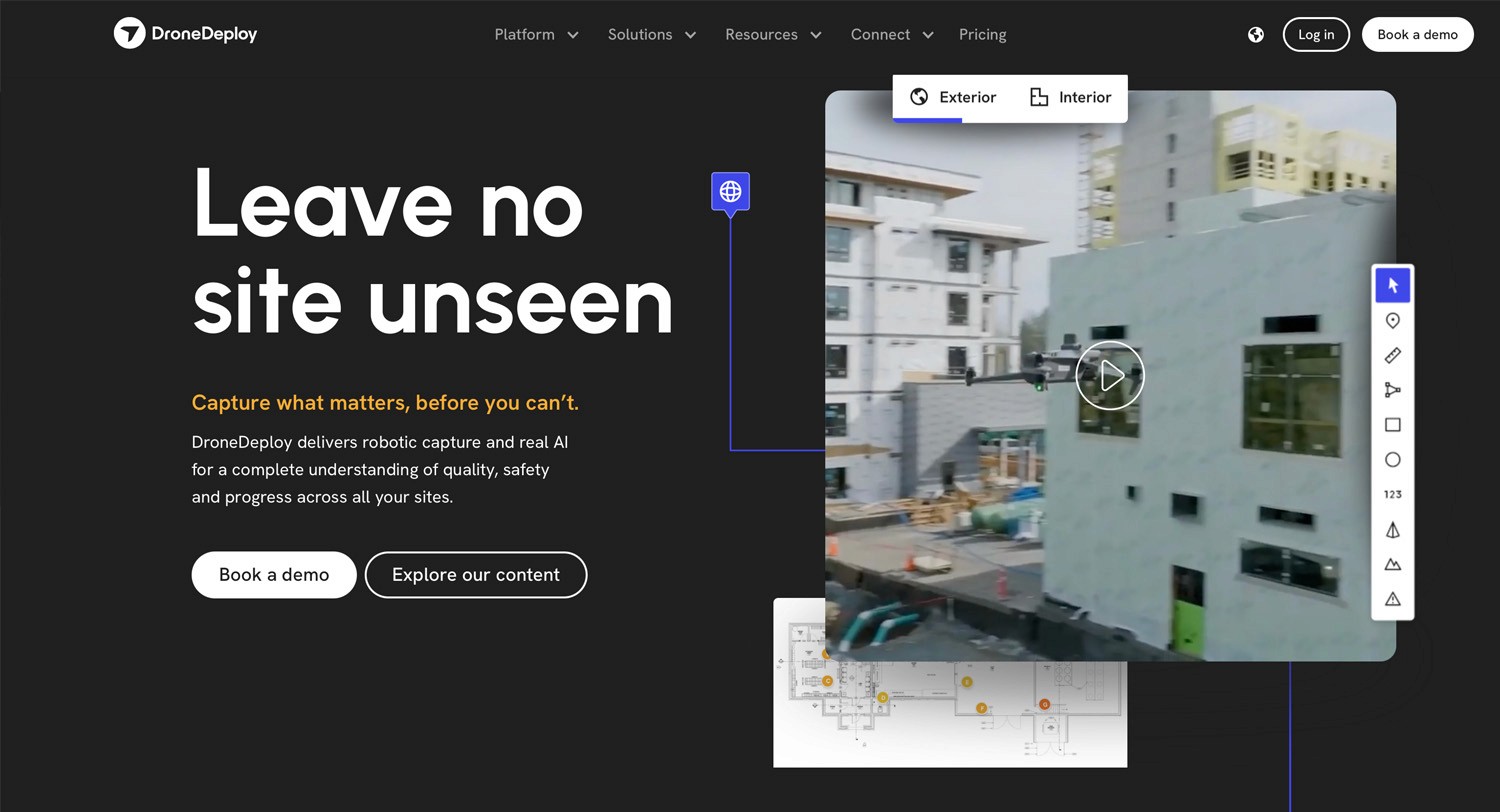
While suitable for straightforward mapping and visual documentation, DroneDeploy is less focused on high-precision volumetrics or advanced verification workflows, which may limit its applicability for complex engineering or surveying projects.
How to choose the right drone data platform
Choosing a drone data platform in 2026 is less about finding a single “best” solution and more about identifying the platform that aligns with your operational realities. Ask yourself:
How accurate does your data need to be, and is verification required?
Not all projects require survey-grade outputs, but when financial, contractual, or compliance decisions depend on the data, accuracy and quality control become critical. Some platforms rely solely on automated processing, while others like AVAG also offer validation, ground control integration, or expert review for higher confidence deliverables.
How large and frequent are your projects?
Project scale and update frequency influence both performance needs and cost efficiency. Large or multi-site projects benefit from cloud-based platforms with strong data management and sharing capabilities, while smaller or occasional projects may not require the same level of infrastructure.
How well does the platform integrate with your existing tools?
Seamless integration with CAD, GIS, or BIM software can significantly reduce manual work and data reprocessing. Compatibility with established design and analysis tools is often a deciding factor for engineering-driven organizations.
What are your budget and licensing preferences?
Licensing models vary widely, from subscriptions to perpetual licenses. Some teams prefer predictable operating costs, while others favor one-time purchases. It’s important to consider not just upfront pricing, but also scalability, support, and long-term value. For a detailed comparison of plan options, see AVAG's pricing.
By answering these questions, you can narrow the focus on platforms that support your workflows today while remaining adaptable as drone data requirements continue to evolve. For a deeper dive into what to look for, see our guide to choosing photogrammetry software.
Compare the best drone data platforms
To make comparison easier, the table below summarizes the seven platforms across key criteria that are most relevant when evaluating drone data software in 2026. It highlights how each platform differs in terms of primary use cases, processing approach, deployment model, collaboration capabilities, accuracy expectations, and overall usability.
Platform | Processing approach | Cloud / desktop | Collaboration & sharing | Ease of use | Best fit for |
|---|---|---|---|---|---|
AVAG Pro | Automated + Expert-verified | Cloud | Strong (remote access, sharing) | High | Teams needing reliable outputs fast |
DJI Terra | Local desktop processing | Desktop | Basic (file export) | Moderate | DJI users preferring offline workflows |
Skydio 3D Scan | Autonomous capture + processing | Cloud/Edge | Moderate | High | Inspection teams focused on repeatable flights |
Site Scan (DJI) | Cloud | Cloud | Good (project collaboration) | Moderate | Construction teams with DJI fleets |
Propeller | Cloud | Cloud | Moderate | Moderate | Earthmoving & stockpile operations |
Pix4D | Desktop + Cloud options | Desktop/Cloud | Moderate | Lower (steeper learning curve) | Surveying & technical users needing accuracy |
DroneDeploy | Cloud | Cloud | Strong (mobile + team) | High | Quick field mapping and visualization |
Platform | Processing approach | Cloud / desktop | Collaboration & sharing | Ease of use | Best fit for |
|---|---|---|---|---|---|
AVAG | Automated + Expert-verified | Cloud | Strong (remote access, sharing, unlimited users) | High | Teams needing reliable outputs fast |
DJI Terra | Local desktop processing | Desktop | Basic (file export) | Moderate | DJI users preferring offline workflows |
Skydio 3D Scan | Autonomous capture + processing | Cloud/Edge | Moderate | High | Inspection teams focused on repeatable flights |
Site Scan for ArcGIS | Cloud | Cloud | Good (project collaboration) | Moderate | Construction teams with DJI fleets |
Propeller | Cloud | Cloud | Moderate | Moderate | Earthmoving & stockpile operations |
Pix4D | Desktop + Cloud options | Desktop/Cloud | Moderate | Lower (steeper learning curve) | Surveying & technical users needing accuracy |
DroneDeploy | Cloud | Cloud | Strong (mobile + team) | High | Quick field mapping and visualization |
Summary
A drone data platform processes aerial imagery into actionable outputs: orthomosaics, 3D models, volume calculations, and progress reports.
U.S. commercial drone registrations reached 965,524 by end of 2024, with construction and real estate leading commercial use cases.
AVAG offers unlimited users, EU-hosted data, DJI Dock integration, and multi-source ingestion for drone, scanner, 360°, and CAD data.
DJI Terra suits users locked into DJI hardware who prefer desktop processing and perpetual licensing.
Skydio 3D Scan excels at autonomous inspection in constrained environments.
Site Scan for ArcGIS targets construction teams needing BIM integration and progress tracking.
Propeller focuses on earthworks volumetrics with its AeroPoints ground control system.
Pix4D offers deep processing control for technically advanced users willing to invest in setup time.
DroneDeploy prioritizes ease of use and mobile capture for field teams.
What is a drone data platform?
How do I pick the right platform for construction?
Can I use data from different drone brands?
What accuracy should I expect?
See what your geospatial data can really do
Join more than 1,000 satisfied users. Just upload your files and see results.
No credit card required

About the author

Zaneta Styblova
Content Lead at AVAG Pro
Zaneta Styblova is a content professional with over eight years of experience in content marketing. She crafts impactful content that resonates with global audiences, drawing on a strong background in linguistics and a deep understanding of how language, structure, and tone shape effective communication.
Subscribe and do not miss latest posts
Blog
Explore more articles

Integrating drone data with CAD drawings for site analysis
Why wait days for a surveyor when your drone can update the site plan by afternoon?
Read more

What does “photogrammetrically” mean? A plain explainer
Learn what “photogrammetrically” means and how photos become accurate 3D site measurements.
Read more